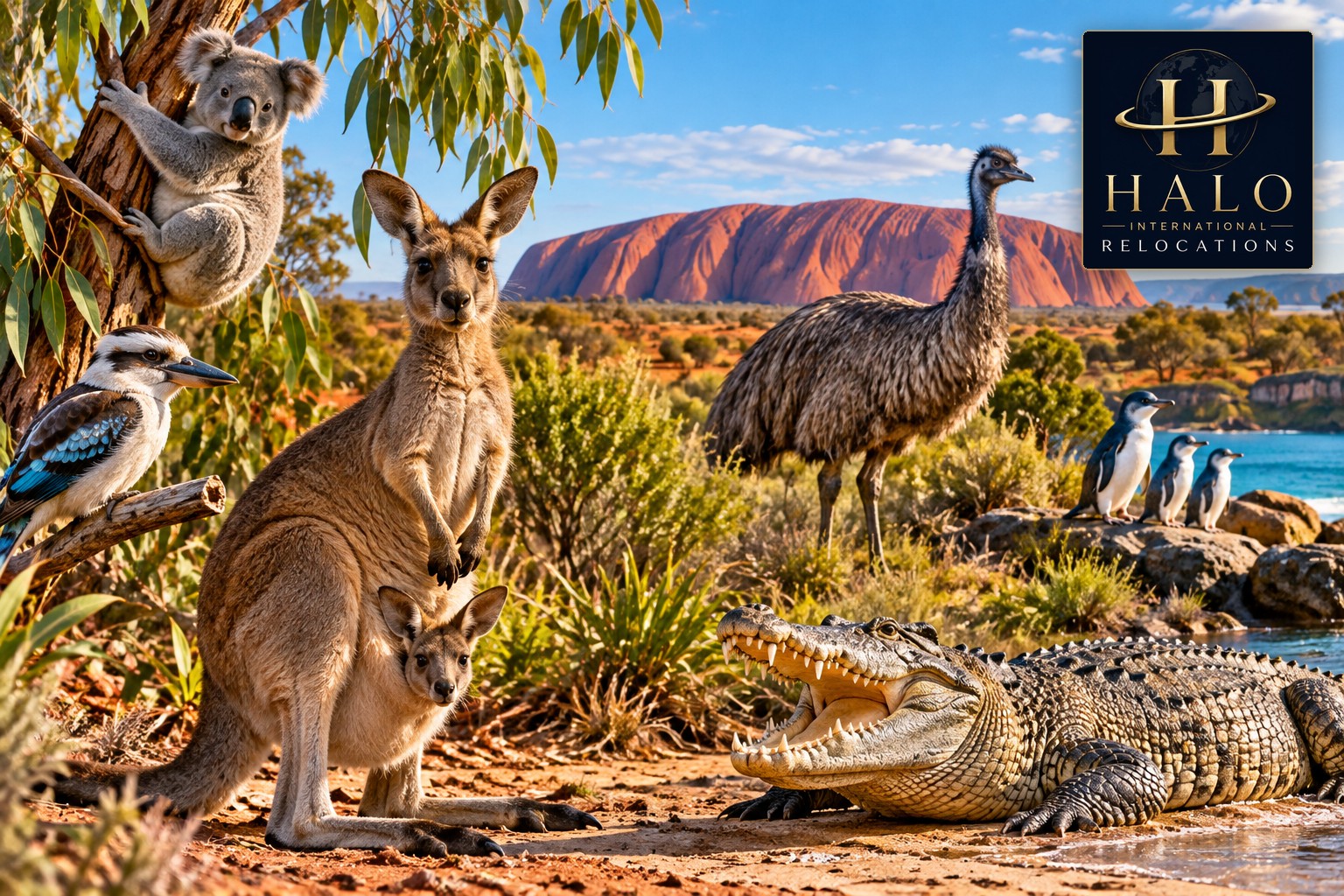
Why Australia’s wildlife is unique
Australia has been an island continent for tens of millions of years, and its animals evolved in isolation. The result is wildlife found nowhere else: most of its mammals, reptiles and frogs are unique to the country. It is home to marsupials that carry their young in a pouch, and to monotremes — the platypus and the echidna — mammals that lay eggs.
That isolation is also why Australia guards its borders so closely. The strict biosecurity checks on your shipment, from muddy boots to garden furniture, exist to keep out pests and diseases that could devastate native species. Our guide to moving to Australia explains how to pack for them.
The animals everyone wants to see
- Kangaroos and wallabies. Far from rare: in many suburbs on the edge of the bush, mobs of eastern grey kangaroos graze on playing fields and golf courses at dawn and dusk. Admire them from a distance, as a large male can be aggressive.
- Koalas. Harder to spot than you might expect. They sleep up to 20 hours a day high in eucalyptus trees, and wild populations in parts of Queensland, New South Wales and the ACT are listed as endangered.
- Wombats. Stocky, nocturnal burrowers common in the cooler south-east and Tasmania. You are most likely to meet one on a country road after dark.
- Platypus and echidna. The platypus lives in rivers and creeks in eastern Australia and Tasmania and is shy, so look for ripples at dawn or dusk. Echidnas are widespread and often seen trundling through the bush.
- Quokkas. Small, cheerful-looking marsupials famous for selfies on Rottnest Island, a short ferry ride from Perth. Touching or feeding them is an offence.
- Tasmanian devils. Found in the wild only in Tasmania, where wildlife sanctuaries run conservation breeding programmes.
- Birds. The everyday soundtrack: kookaburras laughing at dawn, flocks of cockatoos, galahs and rainbow lorikeets, and the warbling song of the magpie. Emus and cassowaries are the giants, the cassowary confined to the rainforests of far north Queensland.
- Whales and dolphins. Humpback whales migrate along the east and west coasts, roughly May to November, and can often be seen from headlands.
Where to see wildlife near each city
Every capital has wildlife on its doorstep. These are the places new arrivals tend to visit first.
| City | Places to try | What you might see |
|---|---|---|
| Sydney | Taronga Zoo, Ku-ring-gai Chase and Royal National Parks, coastal headlands in winter | Native animals at the zoo; wallabies, lyrebirds and passing whales in the wild |
| Melbourne | Healesville Sanctuary, Phillip Island, the You Yangs | Platypus and koalas; little penguins coming ashore at dusk; wild koalas and kangaroos |
| Brisbane | Lone Pine Koala Sanctuary, Moreton Bay, Daisy Hill Conservation Park | Koalas; dolphins, dugongs and turtles in the bay |
| Perth | Rottnest Island, Caversham Wildlife Park, the Swan River | Quokkas; dolphins in the river |
| Adelaide | Cleland Wildlife Park, Kangaroo Island | Koalas and kangaroos; sea lions, koalas and kangaroos in the wild on the island |
| Canberra | Tidbinbilla Nature Reserve, the city’s nature parks | Kangaroos almost everywhere, platypus, emus and koalas |
| Hobart | Bonorong Wildlife Sanctuary, Maria Island, Bruny Island | Tasmanian devils; wombats, wallabies and echidnas in the wild |
| Darwin | Territory Wildlife Park, Kakadu and Litchfield National Parks | Saltwater crocodiles, wallabies and huge numbers of birds |
Opening times, prices and animal encounters change, so check each venue’s own website before you go.
Snakes and spiders: the honest picture
Australia’s reputation for deadly creatures is the question we are asked about most, and the reality is far less alarming than the stories. Australia has many of the world’s most venomous snakes, but snakebite deaths average around two a year across the whole country. No one is confirmed to have died from a spider bite since antivenom for the funnel-web spider was introduced in 1981.
- Snakes such as brown snakes, tiger snakes and red-bellied black snakes live in suburbs as well as the bush, especially near water and long grass. They are most active in the warmer months and will almost always move away if left alone. Most bites happen when people try to catch or kill them.
- Spiders you are likely to meet include the redback, which hides under outdoor furniture and in sheds, and the large but harmless huntsman, which has a habit of appearing indoors. The Sydney funnel-web lives around Sydney and the east coast and needs urgent treatment if it bites.
- Ticks are a bigger everyday nuisance on the east coast. The paralysis tick can make people unwell and is dangerous to pets. Check yourself, your children and your dog after walks in the bush.
First aid for a snake bite
Call 000. Keep the person still and calm, and apply a pressure immobilisation bandage: a firm elastic bandage over the bite, then the whole limb, and a splint to keep it still. Do not wash the bite, cut it or use a tourniquet. The same treatment applies to a funnel-web bite. For advice on any bite or sting, the Poisons Information Centre is on 13 11 26. A short first aid course in your first months is one of the best investments a new arrival can make.
In the water
Most beaches are patrolled by volunteer lifesavers through the summer. The single best habit is to swim between the red and yellow flags: rip currents cause far more harm than any animal.
- Box jellyfish and Irukandji live in tropical waters across northern Australia, mainly from November to May. Many beaches have stinger nets, and a full-length stinger suit is sensible. Vinegar is the first aid for a box jellyfish sting, and you will find bottles on beach posts in the north.
- Saltwater crocodiles live in rivers, estuaries and coastal waters across the north, from central Queensland through the Northern Territory to the Kimberley. Obey every warning sign, never swim where crocodiles may live and keep well back from the water’s edge.
- Sharks are present along the whole coast, but bites are rare. Many popular beaches use drones, nets or alert systems. Avoid swimming at dawn and dusk, near river mouths or where people are fishing.
- Blue-ringed octopus and stonefish hide in rock pools and shallows. Look but never touch, and wear shoes on reefs.
In the garden and around the home
The wildlife you see most often will be in your own back garden.
- Possums are protected native animals and often move into roof spaces. You cannot simply get rid of one: the usual answer is a licensed catcher, or a possum box in the garden so it has somewhere better to live.
- Swooping magpies defend their nests in spring, roughly August to November. Learn the local hotspots, walk rather than run, and wear a hat or sunglasses on the back of your head. Cyclists often fit cable ties to their helmets.
- Cockatoos are beautiful and destructive, with a taste for timber decks, window frames and wiring. Do not feed them, or they will keep coming back.
- Flying foxes and bats are an evening sight in many cities. Never handle one: some carry Australian bat lyssavirus, a disease related to rabies. Call a wildlife carer if you find one injured.
- Insects are part of life, especially in the north. Fly screens, mosquito repellent and regular pest control are normal household costs, and termite inspections are standard when renting or buying a house.
Keep shoes indoors overnight, wear gloves for gardening, and shake out boots, towels and washing left outside. These small habits remove most of the risk from snakes and spiders.
On the road
Wildlife on the road is a genuine hazard outside the cities. Kangaroos are most active at dawn and dusk and can jump unpredictably into traffic, and wombats and wallabies are hard to see at night. Slow down in signed areas, avoid driving in the country after dark where you can, and brake rather than swerve if an animal appears.
If you hit an animal, stop only if it is safe. Female marsupials may have a living joey in the pouch even when the mother has died, so call a local wildlife rescue service, who will send a trained carer.
Pets and native wildlife
If you are bringing a cat or dog, a few local risks are worth knowing:
- Paralysis ticks on the east coast can kill dogs and cats. Ask your new vet about a preventive treatment straight away.
- Cane toads in Queensland, northern New South Wales, the Northern Territory and northern Western Australia are toxic to dogs that mouth them.
- Snakes bite more pets than people. Keep grass short and keep dogs on a lead in the bush.
- Cats hunt native wildlife, and the ACT and a growing number of councils require cats to be kept indoors or contained, at least at night. Check your council’s rules before you choose a home.
Bringing a pet to Australia takes at least seven months of planning. Our moving guide sets out the import permit, vaccination and quarantine steps.
Rules worth knowing
- Native animals are protected by law in every state and territory. Harming, capturing or keeping them without a licence is an offence.
- Do not feed wildlife. Human food makes animals ill and teaches them to approach people. In national parks and on Rottnest Island, it can earn you a fine.
- Native animals cannot be kept as pets without a permit, and the rules differ from state to state.
- Found an injured animal? Call a wildlife rescue organisation or a local vet, who will usually treat native wildlife free of charge.
Useful links
These sources are a good place to start learning about the wildlife where you will live.
| Topic | Website | Use it for |
|---|---|---|
| General | Australian Museum: animals | Identifying animals, snakes and spiders |
| Health | Healthdirect: snake bites | First aid for bites and stings |
| Beaches | Beachsafe | Patrolled beaches, conditions and hazards |
| Rescue | WIRES | Wildlife rescue in New South Wales |
| Rescue | Wildlife Victoria | Wildlife rescue in Victoria |
| Parks | Parks Australia | National parks including Kakadu and Uluru |
| Moving | Moving to Australia from the UK | Visas, costs, biosecurity, shipping and pets |
This guide is general information for people planning a move, correct to the best of our knowledge in October 2026. It is not medical advice. In an emergency in Australia, call 000.